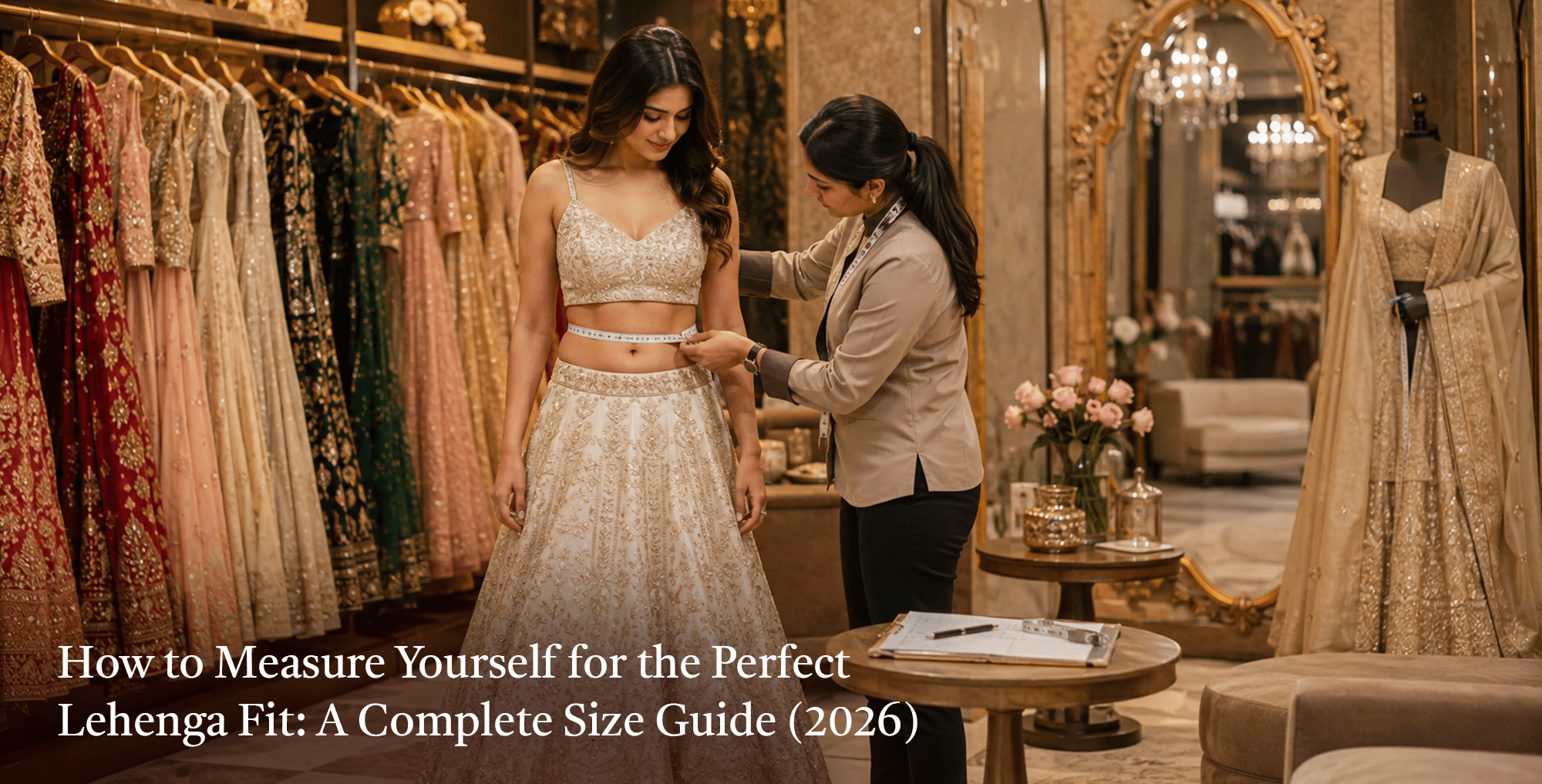
How to Measure Yourself for the Perfect Lehenga Fit: A Complete Size Guide
A beautifully handcrafted lehenga deserves an equally beautiful fit. No matter how luxurious the fabric or intricate the embroidery, the right measurements are what truly bring an outfit to life.
Whether you're ordering a bridal lehenga, festive wear, or a custom-made designer piece online, taking accurate body measurements helps ensure comfort, confidence, and a flattering silhouette.
At Jind Mahia, every handcrafted creation is designed to celebrate Indian craftsmanship while fitting beautifully into your special moments.
"Precision in measurement honors precision in craft—ensuring every seam, flare, and drape moves as naturally as you do."
Why Accurate Measurements Matter
Choosing the correct size is about more than numbers.
A well-fitted lehenga allows you to:
- Move comfortably during long multi-day ceremonies
- Dance with confidence without constant adjusting
- Highlight your natural silhouette with effortless grace
- Reduce alteration costs and avoid time-consuming adjustments
- Preserve the original craftsmanship by preventing structural stress on hand-stitched seams
Taking a few extra minutes to measure correctly can make a significant difference.
Preparation Checklist
Before measuring, keep these essential items ready:
Style Tip: Always measure wearing the exact style of innerwear and footwear (or heel height) you plan to wear with your final bridal ensemble. Avoid measuring over thick or bulky everyday clothing.
General Measuring Protocol
For the best results:
- Stand naturally in an upright, relaxed posture.
- Keep your shoulders relaxed and arms resting by your side.
- Do not pull the measuring tape too tightly; it should sit snugly without digging into the skin.
- Measure twice to confirm accuracy.
- Record measurements in a consistent unit (inches or centimeters).
Step-by-Step Body Measurement Guide
1. Blouse & Upper Body Measurements
| Measurement Point | How to Measure | Fitting Relevance |
|---|---|---|
| Bust | Wrap tape around the fullest part of your bust, keeping it parallel to the floor. | Determines primary blouse size. |
| Underbust | Measure directly beneath your bust where the blouse band sits. | Ensures a structured, supportive torso fit. |
| Shoulder Width | Measure from one shoulder edge to the other across your upper back. | Dictates neck opening and armhole alignment. |
| Sleeve Length | Measure from shoulder point down to preferred length (cap, elbow, full). | Customizes arm coverage and detailing. |
| Armhole | Wrap tape around the fullest part of your upper arm and shoulder joint. | Guarantees full arm mobility for dancing. |
| Blouse Length | Measure vertically from high shoulder point down to desired hem. | Controls midriff exposure and proportion. |
2. Waist, Hip & Skirt Measurements
| Measurement Point | How to Measure | Fitting Relevance |
|---|---|---|
| Waist | Measure around the narrowest point of your natural waistline. | Supports skirt weight securely. |
| Hip | Measure around the widest part of your hips and seat. | Crucial for mermaid and panelled fits. |
| Lehenga Length | Measure from waistband edge down to the floor (with heels on). | Prevents dragging or ankle exposure. |
Detailed Measurement Breakdown
1. Bust Measurement
Wrap the measuring tape around the fullest part of your bust. Ensure the tape stays parallel to the floor, sits comfortably without compression, and doesn't sag at the back. This measurement determines the blouse size.
2. Underbust Measurement
Measure directly beneath your bust along your ribcage. This helps create a structured, supportive blouse base and prevents lifting when you raise your arms.
3. Shoulder Measurement
Measure from the outer edge of one shoulder bone to the other across the curve of your upper back. Proper shoulder measurements improve total comfort and neckline alignment.
4. Sleeve Length
Measure from the top shoulder point down to your preferred sleeve length. Common options include sleeveless, cap sleeves, elbow sleeves, three-quarter sleeves, or full sleeves.
5. Armhole Measurement
Wrap the measuring tape comfortably around the fullest part of your upper arm joint. This ensures effortless movement without restricting movement during festivities.
6. Waist Measurement
Measure around the natural line where you intend to tie your lehenga skirt (typically the narrowest part of your torso or just at the belly button). Do not hold your breath or pull your stomach in—a natural posture provides the most comfortable fit.
7. Hip Measurement
Measure around the fullest part of your hips and glutes. This is especially vital for fitted, A-line, or mermaid-style lehengas to allow comfortable sitting and walking.
8. Lehenga Length
Measure vertically from your waist tying point down to where you want the skirt hem to end (typically skimming the top of the floor). Always wear your intended wedding shoes or heels while taking this measurement.
9. Blouse Length
Measure vertically from the shoulder seam down to your desired blouse hemline. Different cuts require precise lengths depending on your desired midriff coverage.
Silhouette-Specific Fitting Considerations
Different lehenga styles call for targeted measurement focus:
- A-Line Lehenga: Requires accurate waist and length measurements; offers a universally comfortable, balanced drape.
- Circular (Flared) Lehenga: Requires precise waist measurements to properly support the weight of heavy flare fabric and can-can layering.
- Mermaid Lehenga: Demands exact waist, hip, and upper-thigh measurements to maintain a contoured, sculpted silhouette without restricting gait.
- Panelled (Kali) Lehenga: Focuses on natural waist anchoring, distributing fabric weight evenly across all vertical panels.
Common Measuring Mistakes to Avoid
- Measuring Over Thick Clothing: Leads to inflated numbers and loose garments.
- Pulling the Tape Too Tight: Causes tight seams that dig in during long rituals.
- Guessing or Estimating: Leads to misaligned necklines or incorrect sleeve fits.
- Ignoring Footwear Height: Results in skirts that are either too short or trip you up on the wedding floor.
- Forgetting to Measure Twice: Single measurements can miss alignment shifts.
How Much Ease Should a Lehenga Have?
A luxury designer lehenga should feel tailored without being restrictive. Allow enough natural ease to:
- Sit comfortably through extended ceremonies
- Walk naturally without holding up the hem unnecessarily
- Dance freely during high-energy celebrations
- Accommodate fine undergarments or shapewear seamless layers
Online Ordering & Sizing Checklist
Before finalizing your custom order:
- Compare your recorded numbers against our official size metrics.
- Re-verify every measurement twice.
- Reach out to customer care if your measurements span across two standard sizes.
- Opt for custom tailoring when ordering bridal or high-embellishment pieces.
Post-Delivery Care & Fitting Process
Once your handcrafted Jind Mahia garment arrives:
- Initial Fitting: Try it on immediately while wearing your intended bridal heels and undergarments.
- Movement Test: Walk, sit, raise your arms, and turn to evaluate the comfort of the armhole, bust, and waistband.
- Alteration Buffer: Schedule any minor localized alterations early to ensure stress-free preparation.
- Storage: Hang the lehenga using internal garment loops inside a breathable garment bag.
Why Choose Jind Mahia?
Every Jind Mahia creation reflects the beauty of handcrafted Indian artistry.
Our collections are thoughtfully designed with premium fabrics, timeless silhouettes, and meticulous craftsmanship, ensuring every woman feels confident and elegant for life's most memorable occasions. From bridal celebrations to festive gatherings, our garments are made to become cherished pieces in your wardrobe.
Frequently Asked Questions
Should I measure myself or ask someone to help?
While you can take basic measurements yourself, having someone assist ensures much higher accuracy—especially across the back shoulders, armholes, and floor-length skirt drop.
What if I'm between two sizes?
If your measurements sit between standard sizes, select the larger size to allow for easy tailoring down, or choose custom made-to-measure sizing.
Should I wear heels while measuring lehenga length?
Yes. Always measure skirt length while wearing footwear with the exact heel height you intend to wear during the event.
How often should I remeasure before ordering?
If your measurements were taken more than 2 to 3 months ago—or if your body shape has shifted—take fresh measurements right before placing your order.
Can a handcrafted lehenga be altered later?
Yes. Jind Mahia lehengas are crafted with internal seam margins, allowing professional tailors to make minor adjustments if needed.
Explore More from Jind Mahia
Discover handcrafted designer pieces made to order with authentic technique:
- Bridal Lehengas Collection
- Designer Lehengas
- Handcrafted Sarees
- Luxury Kurtas
- Artisanal Dupattas
- Wedding Guest Collection